Choosing a professional makeup course in Hyderabad is an important decision when you want to turn an interest in makeup into practical, client-ready skills. The right course should teach much more than a fixed sequence of products. It should help you understand skin, colour, facial features, hygiene, product selection and the reason behind every technique.
The best course for you will depend on your present skill level, career plans, available practice time and the kind of services you eventually want to offer.
Cheritan Makeup Studio & Academy provides beginner-friendly, hands-on makeup training near KPHB Metro Station in Hyderabad. Led by makeup and beauty professional G.V. Babu, the academy focuses on understanding techniques, guided practice, professional working habits and preparation for real client services
What should the best makeup course include?
A professional makeup artist course should ideally include:
- Skin types, skin conditions and skin preparation
- Skin-tone and undertone identification
- Makeup products, brushes and tools
- Colour theory and colour correction
- Foundation selection and base application
- Concealing and complexion balancing
- Eye makeup, eyeliner, lashes and eyebrows
- Blush, contour, bronzer and highlighting
- Lip preparation and colour selection
- Bridal and occasion makeup
- Hygiene and tool sanitisation
- Client consultation and look planning
- Guided hands-on practice
- Portfolio and career guidance
Do not select a course only because it promises certification. The quality of practical training, trainer feedback and the skills you can demonstrate after completion are more important.
Why join a professional makeup course?
Online videos can help you discover products or observe a new look. However, watching a demonstration is different from applying makeup correctly on another person.
Every client has a different skin type, undertone, face structure, comfort level and preferred finish. A technique that works well on one person may need to be changed for another. Professional training helps you understand how to make these decisions.
A structured course also provides feedback. When foundation looks uneven, eyeshadow appears patchy or a hairstyle does not remain secure, an experienced trainer can help you identify the cause. You can then correct the method and practise it again.
This process of understanding, practising and refining is essential for developing reliable skills.
Who can join a makeup artist course?
Professional makeup training may be suitable for:
- Complete beginners interested in makeup
- Students planning a beauty career
- Homemakers looking for flexible earning opportunities
- Beauticians who want to add makeup services
- Salon employees who want to upgrade their skills
- Freelancers seeking structured professional training
- Existing artists who want to improve their technique
- Beauty-content creators interested in practical knowledge
You do not need an existing professional portfolio to start a beginner-friendly course. Patience, consistency and willingness to practise are more valuable at the beginning.
If you only want to learn makeup for yourself, ask whether personal makeup classes would be more suitable. A professional course is designed for students who want to learn how to work on different clients.
What will you learn in a professional makeup course?
1. Skin types and skin preparation
Professional makeup begins before foundation is applied. Students must learn to observe the skin and prepare it appropriately.
Training should explain:
- Dry, oily and combination skin
- Basic identification of skin condition
- Cleansing and moisturising
- Primer selection
- Lip preparation
- Preparing textured or mature skin
- Choosing products for different skin needs
Good preparation can improve application, comfort and the final appearance of makeup.
2. Skin tone, undertone and colour theory
A professional artist needs to understand the difference between skin tone and undertone. This knowledge supports more accurate foundation, concealer and colour selection.
Students should learn how warm, cool and neutral undertones affect product choices. Basic colour theory also helps with neutralising the appearance of pigmentation, redness and under-eye discolouration.
The objective is not to apply more product. It is to select and place the appropriate product carefully.
3. Products, brushes and professional hygiene
Knowing what a product does is as important as knowing how to apply it. A professional course should explain the purpose of primers, foundations, concealers, powders, blushes, eye products and setting products.
Students must also learn how different brushes and tools affect application.
Hygiene training should cover:
- Cleaning and sanitising brushes
- Using disposable applicators
- Avoiding double-dipping
- Maintaining a clean workstation
- Checking product condition
- Organising a professional kit
- Preparing tools before a client arrives
- Preventing avoidable cross-contamination
Hygiene is not merely a classroom topic. It is a professional responsibility toward every client.
4. Base makeup, foundation and concealing
Base makeup affects the complete look. Students should learn how to select a suitable foundation shade, control coverage and create a finish that works with the client’s skin and occasion.
Practical training may include:
- Primer placement
- Foundation matching
- Foundation application
- Colour correction
- Concealing
- Setting with powder
- Preventing a heavy or uneven finish
- Reviewing the base in different lighting
A professional finish does not always mean full coverage. The artist should understand the brief and adjust the result accordingly.
5. Eye makeup and eyebrows
Eye makeup needs to be planned according to eye shape, outfit, event and desired level of drama.
Training should cover:
- Eye-shape assessment
- Eyeshadow placement
- Blending techniques
- Eyeliner application
- Kajal placement
- False-lash application
- Eyebrow shaping and filling
- Soft and defined eye looks
- Correcting balance and symmetry
Instead of memorising one eye look, students should understand how placement changes the overall effect.
6. Contour, blush and highlighting
Contour, bronzer, blush and highlighter should complement the client’s features. The same placement will not suit every face.
Students need to understand facial structure and practise controlled product placement. The aim should be a balanced result rather than following a trend without considering the person.
7. Lip preparation and finishing
Lip makeup includes preparation, shaping, colour selection and finishing. Students should learn how to create definition while respecting the client’s natural features and preferred look.
Final setting is also important. Before completing the service, an artist should examine the overall balance, complexion, eye symmetry and product finish.
Learning bridal and occasion makeup
Many aspiring artists in Hyderabad are particularly interested in bridal makeup. Bridal work involves more than producing a dramatic look. The artist must understand the event, outfit, jewellery, ceremony timing, lighting, photography and bride’s preferences.
Bridal training should help students understand:
- Client consultation
- Skin preparation for longer events
- Long-wear base techniques
- Traditional and modern bridal finishes
- Outfit and jewellery coordination
- Makeup suitable for photography
- Working within a planned schedule
- Completing and reviewing the full look
Students should ask whether complete-look practice, hairstyling, saree draping, models or photoshoots are included in their selected programme. These should be confirmed before admission rather than assumed.
Why hands-on practice matters
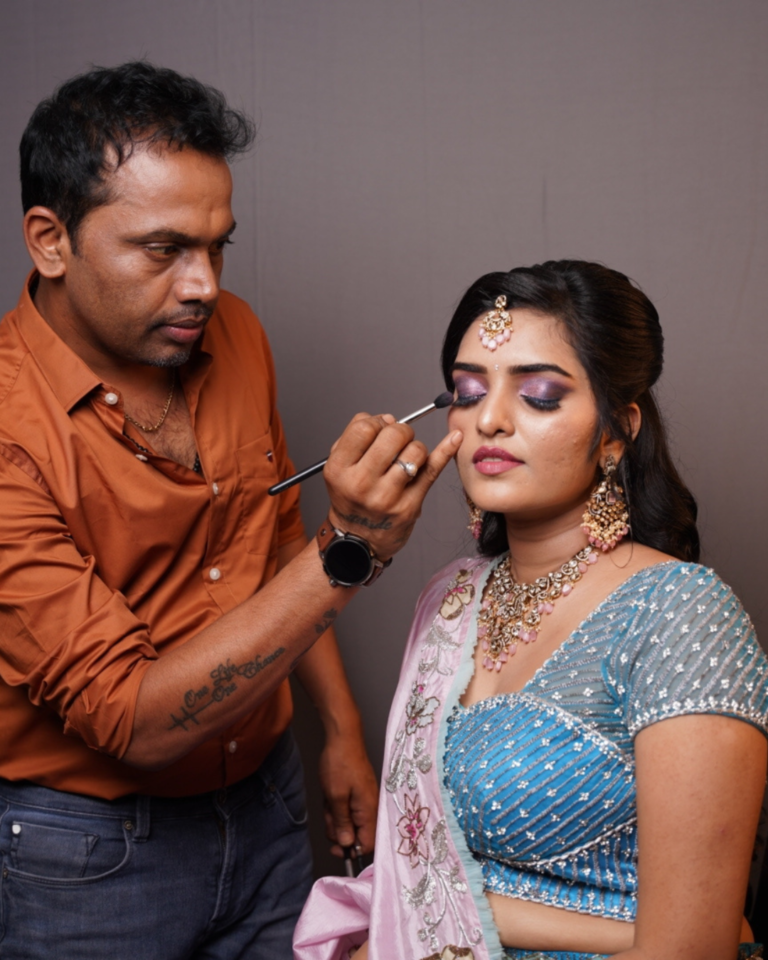
Watching a trainer can make a technique appear simple. The real learning begins when the student attempts it independently.
Hands-on practice helps students recognise challenges involving:
- Brush pressure and control
- Foundation quantity
- Blending
- Eyeliner symmetry
- Lash application
- Product placement
- Client comfort
- Time management
- Final finishing
A useful practical session should follow a simple cycle: understand the technique, observe the demonstration, practise it, receive feedback and apply the correction.
Students can maintain photographs and notes from each session. Comparing similar practice attempts over time makes improvement easier to assess.
Why consider Cheritan Makeup Academy in Hyderabad?
Cheritan combines professional makeup services with practical beauty education in KPHB, Hyderabad.
Guidance from an experienced trainer
Cheritan is led by G.V. Babu, a makeup and beauty professional with more than 20 years of industry experience across bridal, beauty, fashion and entertainment. The training approach focuses on both the finished result and the reasoning behind each technique.
Beginner-friendly curriculum
The professional makeup course begins with skin, colour, products, brushes and hygiene before progressing to complexion work, eye makeup, facial definition, lips and bridal or occasion looks.
Guided practical learning
Cheritan emphasises hands-on practice alongside step-by-step demonstrations. Students are encouraged to understand, apply and refine what they learn.
Portfolio development
Portfolio work can help students present their developing skills to salons, studios and prospective clients. Students should ask what portfolio activities are included in the current course.
Certification and career guidance
Cheritan provides course-completion certification and guidance related to bridal, freelance, salon and studio opportunities. Certification records your training, while professional growth depends on practice, consistency, work quality and client relationships.
Accessible KPHB location
The academy is located near KPHB Metro Station, making it accessible for students travelling from Kukatpally, Miyapur, Moosapet, JNTU, Ameerpet and nearby Hyderabad areas.
How to Compare Makeup Academies in Hyderabad
Before paying a course fee, compare the syllabus, trainer experience, practical training, total training hours, makeup kit, certification and career support. The table below can help you choose the right makeup academy in Hyderabad.
| Check Before Joining | Why It Matters |
|---|---|
| Complete syllabus | Shows exactly which makeup techniques and topics you will study. |
| Trainer experience | Helps you evaluate the quality of professional guidance. |
| Hands-on practice | Builds practical makeup application skills and confidence. |
| Batch size | Determines how much individual attention you may receive. |
| Practice arrangements | Clarifies whether you will practise on models, classmates or yourself. |
| Product availability | Helps you avoid unexpected expenses during the course. |
| Makeup kit inclusion | Helps you calculate the complete cost of the course. |
| Course duration | Helps you plan attendance and other commitments. |
| Total training hours | Provides more clarity than the number of course days alone. |
| Certification terms | Explains attendance and course-completion requirements. |
| Portfolio support | Helps you showcase your makeup work professionally. |
| Missed-class policy | Explains whether replacement or makeup classes are available. |
| Career guidance | Helps you understand employment, freelance and business opportunities. |
The best makeup academy in Hyderabad should provide a transparent syllabus, experienced trainers, sufficient hands-on practice, clear fee details, manageable batch sizes and reliable career or portfolio support.
Career opportunities after completing makeup training
Depending on ability and experience, trained students may explore work as:
- Bridal makeup artists
- Freelance makeup artists
- Salon or studio artists
- Occasion makeup professionals
- Fashion and portfolio makeup artists
- Makeup assistants
- Independent beauty entrepreneurs
Completing a course does not guarantee employment or client bookings. Students still need to practise, build an honest portfolio, communicate professionally and gradually gain real experience.
New artists can begin by assisting experienced professionals, collaborating on portfolio shoots or accepting suitable smaller assignments. Never claim another artist’s work as your own.
How to join Cheritan Makeup Academy
The admission process can begin with the following steps:
- Decide whether you are interested in makeup, beauty or another specialisation.
- Contact Cheritan and explain your present experience and goals.
- Request the current syllabus, fee, duration and class timings.
- Ask what products, tools, models and portfolio activities are included.
- Arrange an academy visit near KPHB Metro Station.
- Understand attendance, certification and payment conditions.
- Complete admission only after your questions have been answered.
Frequently asked questions
Which is the best professional makeup course in Hyderabad?
The right course should match your skill level and career goal while providing a detailed curriculum, experienced instruction, hygiene education, hands-on practice and regular feedback.
Can beginners join Cheritan’s makeup course?
Yes. Cheritan describes its professional makeup course as beginner-friendly and starts with foundational topics before progressing to complete looks.
Is the training practical?
Yes. Cheritan’s makeup course focuses on guided hands-on learning alongside demonstrations and professional instruction.
Will I receive a certificate?
Cheritan offers course-completion certification. Contact the academy to confirm current attendance, assessment and completion requirements.
What are the current course fees and batch timings?
Fees and batch schedules can change. Contact Cheritan directly for the current fee, duration, available seats, class timings and inclusions.
Where is Cheritan Makeup Academy located?
Cheritan is located near KPHB Metro Station, Venkat Nagar, Bhagya Nagar Colony, Hyderabad, Telangana 500072.